
Buyer's guide
PSIRA Security Grades Explained
Every security officer and security business in South Africa must be registered with PSIRA, and officers are trained to grades from E to A. Knowing what those grades mean helps you judge whether a quote matches the job and whether the person at your gate is qualified for it.
- Grades A to E compared
- What each grade usually does
- How to verify registration
- Questions to ask providers
What PSIRA is and why it matters
The Private Security Industry Regulatory Authority (PSIRA) is the statutory body that regulates the private security industry under the Private Security Industry Regulation Act. Security service providers, both businesses and individual officers, must be registered with it before they may lawfully render security services.
For clients, registration matters for three reasons. It confirms that officers have completed recognised training. It means the provider is subject to a code of conduct and industry oversight. And it gives you a recourse: complaints about improper conduct can be reported to the regulator. Using an unregistered provider exposes you to poorly trained staff and leaves you with far less protection if something goes wrong.
The five grades at a glance
Training grades run from E, the entry level, up to A. Exact duties depend on the employer, the site and any additional specialised training, but the typical split looks like this:
| Grade | Typical level | Usual duties |
|---|---|---|
| E | Entry level | Basic guarding, observation, simple access control, reporting to a senior officer |
| D | Officer | Access control at gates and entrances, patrols, searches, occurrence book records |
| C | Senior officer / shift leader | Supervising small teams of D and E officers, more responsible posts, incident handling |
| B | Supervisor | Site supervision, rosters, liaison with clients, oversight of several posts |
| A | Management | Security management, planning, risk assessment input, overall responsibility for operations |
How grades apply in practice
A grade is a minimum standard, not the whole story. Many posts also require specialised training on top of the grade, for example armed response, close protection, event control or control-room work. Officers carrying firearms must, in addition, meet the competency and licensing requirements of the Firearms Control Act, which is separate from the PSIRA grade itself.
Good providers match the grade to the post. A residential gate with light traffic may suit a D-grade officer, while a busy industrial gate with vehicle searches, or a site where the officer leads a team, calls for a higher grade and more experience. At Vigilant CQ we match officer grades to the post, based on what the security risk assessment shows the site needs.
How to verify an officer or a company
- Ask to see the officer's PSIRA registration card and check that the name and photograph match the person in front of you.
- Use PSIRA's online verification service on the official PSIRA website, where registration status can be checked using the details on the card.
- Ask the company for its PSIRA business registration and confirm it is current, not lapsed or suspended.
- Contact PSIRA directly through the contact details on its official website if anything does not add up.
A reputable provider will not object to any of these checks.
Questions to ask any security provider
- Which grade will each officer on my site hold, and why is that grade suitable?
- Do armed officers hold the required firearm competencies, and who owns and controls the firearms?
- How are officers screened, supervised and replaced if necessary?
- Is the company's PSIRA registration current, and can I see proof?
- What is in writing about shifts, reliefs and reporting?
Compare the answers alongside price. A quote that is far cheaper than others often means lower grades, thinner supervision or both. See how we answer these on why choose us.
Frequently asked questions
Is a higher grade always better?
Not necessarily. A higher grade brings more training and usually a higher cost, but the right grade is the one that fits the duties of the post. Overstaffing with senior grades wastes budget; understaffing creates risk. Matching grade to post is the goal.
Does a PSIRA grade mean an officer can carry a firearm?
No. A PSIRA grade covers security training. Carrying a firearm on duty requires separate firearm competency and licensing under the Firearms Control Act, plus relevant specialised training. Always ask how armed officers are qualified.
What should I do if I find an unregistered officer on my site?
Raise it with the security company immediately and ask for the officer to be replaced with a registered officer. If the provider cannot resolve it, you can report the matter to PSIRA through its official channels.
Are in-house security staff also required to register?
Generally, people who perform security services, including in-house guarding, are expected to be registered with PSIRA. If you employ your own security staff, check the current requirements with PSIRA directly, as we cannot give legal advice on your specific position.
Explore
 Why Choose UsScreened PSIRA-registered officers, site-specific security design, reachable management and zero tolerance for unethical conduct.View
 Security Guarding ServicesPSIRA-registered officers at static posts and access points, with planned shifts, supervision and reporting.View
 Armed GuardsFirearm-competent, PSIRA-registered officers for high-risk posts, deployed after a risk assessment.View
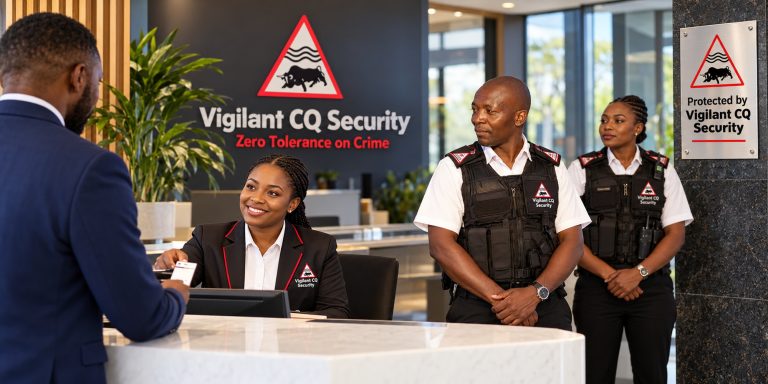 Unarmed Security OfficersAlert, well-presented unarmed officers for access control, visitor management and patrols, backed by supervision.View
Want officers matched properly to your posts? Request an assessment.
Send your brief, quantities and deadline. We reply with a clear written quote and confirm the turnaround before anything goes to production.